Governance: Building an AI Ethics Framework—A Checklist for Modern CTOs
Secure your AI's future. Discover the 5-pillar AI Ethics Checklist for CTOs to ensure transparency, bias mitigation, and Secure Enterprise AI Implementation.
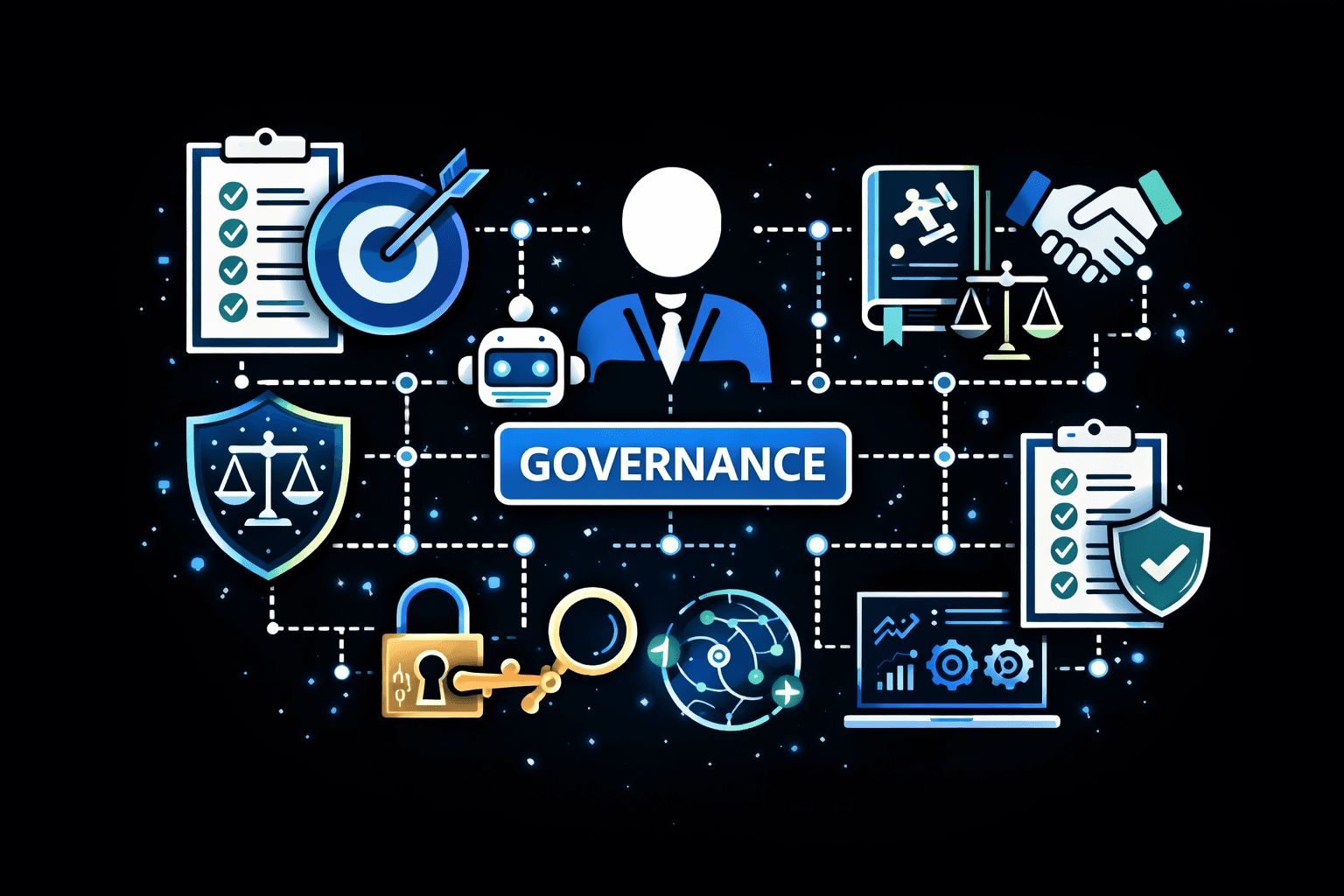
Building an AI Ethics Framework
As we move through 2026, the technical success of a Secure Enterprise AI Implementation is increasingly inseparable from its ethical standing. For the modern CTO, "Ethics" has evolved from a vague set of HR principles into a critical risk-management discipline. Without a robust governance framework, even the most technologically advanced AI system can become a source of legal liability, reputational damage, and operational failure.
The core challenge of the agentic era is Autonomy. When an AI agent makes a decision—whether it’s approving a credit line, filtering a job candidate, or optimizing a supply chain—it must do so within a framework that aligns with both global regulations and corporate values. At MindLink Systems, we believe that an ethical framework is the "Software Development Lifecycle (SDLC)" for the soul of your AI.
Why Ethics is a Core Component of Secure Enterprise AI Implementation
The definition of "Security" has expanded. In 2026, a system is not "secure" if it produces biased outputs that invite lawsuits, or if it hallucinates medical advice that endangers users. A Secure Enterprise AI Implementation must protect the brand as much as it protects the data.
Ethical failures in AI are often silent. Unlike a server outage, a biased algorithm doesn't trigger an immediate 404 error; it quietly erodes the integrity of your business processes. Governance is the proactive monitoring system designed to catch these "silent failures" before they reach a tipping point.
The 2026 Mandate: From "Feel Good" Principles to Enforceable Governance
The era of "Self-Regulation" is over. With the full enforcement of the EU AI Act and the emergence of ISO 42001 certification, the "Checklist" has become a legal ledger. A CTO’s role is now to translate high-level ethical values into "Compliance-as-Code."
The CTO’s AI Ethics Checklist: 5 Critical Pillars
To ensure your Secure Enterprise AI Implementation remains compliant and trustworthy, use this five-pillar framework.
1. Transparency and "Explainability" (XAI)
Can your model "show its work"? In 2026, "the model said so" is an unacceptable answer for auditors.
Requirement: Implement "Chain of Thought" logging. For every significant outcome, the agent must generate a human-readable trace of the data points and logic it used.
Requirement: Use feature-importance tools (like SHAP) to prove that the model isn't relying on "protected characteristics" (race, gender, age) to make decisions.
2. Bias Detection and Mitigation Protocols
Bias is a data problem that manifests as a logic problem.
Requirement: Conduct "Pre-deployment Bias Audits." Test your models against diverse synthetic datasets to ensure equitable performance across all user segments.
Requirement: Establish a "Bias Response Plan." If a production model is found to be drifting toward biased outputs, there must be an automated protocol to revert to a safe baseline.
3. Human-in-the-Loop (HITL) Accountability
Autonomy is not abdication. Every AI action must have a human "Owner."
Requirement: Define "High-Stakes Gates." Any action involving legal commitments or financial transfers over a certain threshold must require a physical "Click to Approve" from a human officer.
Requirement: Maintain a "Registry of Accountability," mapping every agentic workflow to a specific department head.
4. Data Provenance and Intellectual Property Respect
In 2026, where your model learned matters as much as what it learned.
Requirement: Audit the "Training Lineage." Ensure that any fine-tuning data used for your Secure Enterprise AI Implementation was acquired with the necessary commercial usage rights.
Requirement: Respect the "Right to Opt-Out." Ensure your vector databases can process "Forget Me" requests from customers in compliance with GDPR and the 2026 Digital Privacy mandates.
5. Continuous Algorithmic Auditing
Ethics is not a "one-and-done" exercise. Models drift as the world changes.
Requirement: Schedule quarterly "Ethical Stress Tests." Use adversarial agents to try and "trick" your production AI into making unethical or unsafe statements.
Requirement: Publish an internal "AI Transparency Report" to keep the board and stakeholders informed of the model's performance against your RAI (Responsible AI) goals.
Navigating the "Responsibility Gap": Who is Liable When AI Errs?
The most difficult question for a CTO in 2026 is the "Responsibility Gap." If an autonomous agent makes a mistake that leads to financial loss, is it a software bug, a data error, or a management failure?
By building your Secure Enterprise AI Implementation within a governance framework, you close this gap. Accountability is no longer a question of "Who to blame," but a matter of "Which protocol failed." This clarity is what allows enterprises to scale AI safely and with the full support of their legal teams.
Summary: Ethics as the Ultimate Risk Mitigation Tool
In the final analysis, an AI Ethics Framework is the most powerful security tool in your stack. It prevents the social and legal "injections" that a firewall cannot see. By following this checklist, you ensure that your Secure Enterprise AI Implementation isn't just a technical marvel, but a sustainable pillar of your organization’s future.